
Affiliate Marketing Analysis Tools: Understanding What Your Data Is Telling You
Once you begin putting an online marketing strategy into practice, something interesting happens. The questions you ask start to change.
At the beginning, most questions are about learning. What is affiliate marketing? How do I choose a market? What should I write about? How do people find my website? How do affiliate links work?
Once a website is operating and content has been published, the questions become more specific. Which articles are people finding? What are they searching for? Are my pages becoming more visible in Google? Why does one article attract visitors while another receives almost none? Are there technical problems affecting the website? What are competing websites doing differently?
These are no longer simply questions about how online marketing works. They are questions about what is happening within your own marketing.
That is where affiliate marketing analysis tools begin to have a purpose.
The important word, however, is purpose. Collecting more data does not automatically make someone a better marketer. The value comes from understanding what the information means and using it to make a more informed decision.
Why Beginners Need Context Before They Need More Data
Imagine logging into a marketing dashboard for the first time and seeing that one of your webpages ranks at position 18 for a particular keyword.
What should you do with that information?
At first, probably very little. Position 18 means little until we understand the surrounding context. We need to know what the keyword is, whether it is relevant to the people we want to reach, whether anyone searches for it, which page is ranking, and whether the position has been improving or declining.
Suppose that page was in position 67 three months ago, moved to 42, then 29, and is now at 18. Suddenly, the same number tells us something more interesting. The page hasn’t reached the first page of Google’s results, but its search visibility appears to be improving.
Now imagine the opposite. The page was previously at position 4 and has gradually fallen to position 18. The current ranking is identical, but the story behind it is completely different.
This is one of the first principles a beginner needs to understand about marketing analysis:
Data needs context to become useful information.
A marketing tool can tell us what happened. Understanding why it happened—and deciding what to do about it—still requires human judgment.
What Are Affiliate Marketing Analysis Tools?
Affiliate marketing analysis tools are software applications that collect, organize, or present information about different parts of online marketing.
Some help us understand what people search for. Others monitor where webpages appear in search results. Some examine links between websites, while others identify technical problems or provide information about competing websites.
At first glance, these can seem like completely different activities. In practice, they often help answer variations of the same fundamental question:
What is happening, and what can we learn from it?
Think of the instruments in a car. The speedometer tells you how fast you’re traveling. The fuel gauge tells you how much fuel remains. A warning light may indicate that something needs attention.
None of those instruments decides where you’re going.
They provide information that helps you make decisions while traveling.
Marketing analysis tools perform a similar role. They don’t provide the strategy. They provide evidence about what is happening within parts of that strategy.
From Doing the Work to Understanding the Results
This distinction becomes clearer when we look at how a beginner normally develops.
Initially, most attention goes into activity. You research a subject, build a website, create pages, publish articles, add links, and perhaps start communicating through email or social media.
That work is necessary because you can’t measure anything until something has actually happened.
Eventually, however, activity alone is no longer enough. Suppose you’ve published 20 articles over six months. Five regularly attract visitors from search engines, several get occasional traffic, and the rest get almost none.
Now you have evidence.
The temptation might be to rewrite the unsuccessful articles immediately, but a better first response is curiosity.
Why are those five articles performing differently?
Perhaps they cover subjects people search for more frequently. Maybe they answer the searcher’s question more effectively. They might face less competition. Other websites may link to them. Perhaps Google has had more time to understand and index them.
We don’t know the answer yet.
But we now know what question to investigate.
This is where analysis begins.

Keyword Research Is Really Market Research
One of the most common functions within online marketing tools is keyword research.
A keyword is simply a word or phrase someone enters into a search engine. If someone types “how does affiliate marketing work” into Google, that phrase gives us a small clue about what that person wants to know.
Keyword tools can provide additional information, such as related search phrases, estimated search activity, and sometimes an indication of how competitive a particular search may be.
For a beginner, it is easy to see keyword research purely as an SEO exercise: find keywords, put them into articles, and hope to rank.
That misses much of its strategic value.
Keywords provide a window into the language of the market.
Consider the difference between someone searching:
“What is affiliate marketing?”
and someone searching:
“Best affiliate marketing keyword research tool.”
Both searches concern affiliate marketing, but they suggest very different levels of knowledge and intent.
The first person appears to be learning.
The second already understands enough to be investigating a particular type of tool.
This matters because the message appropriate for one person may be completely inappropriate for the other.
Keyword research therefore connects directly to the first stages of our MOS framework:
Market → Message
It helps us understand what people are asking, how they describe their problems, and where they may be in the decision-making process.
The software provides the data.
The marketer provides the interpretation.
Search Rankings Show Visibility, Not Success
Ranking monitoring is another common analytical function.
A ranking tells us approximately where a webpage appears in a search engine for a particular search query.
If your page appears near the top of the results for a relevant search, more people may have an opportunity to discover it. That makes rankings worth monitoring.
But a high ranking isn’t automatically a successful business result.
A page could rank extremely well for a phrase almost nobody searches for. It could attract visitors who are looking for something entirely different from what you provide. A visitor might arrive, discover that the content doesn’t answer their question, and leave immediately.
This is why we need to connect ranking information with other questions.
What is the person searching for?
Does our page satisfy that intention?
Are people clicking the result?
What happens after they arrive?
Rankings therefore tell us something about visibility.
They don’t tell us the whole story about effectiveness.
For a beginner, understanding that distinction can prevent enormous wasted effort chasing rankings simply because a software dashboard shows them moving up or down.
Understanding Backlinks Without the Jargon
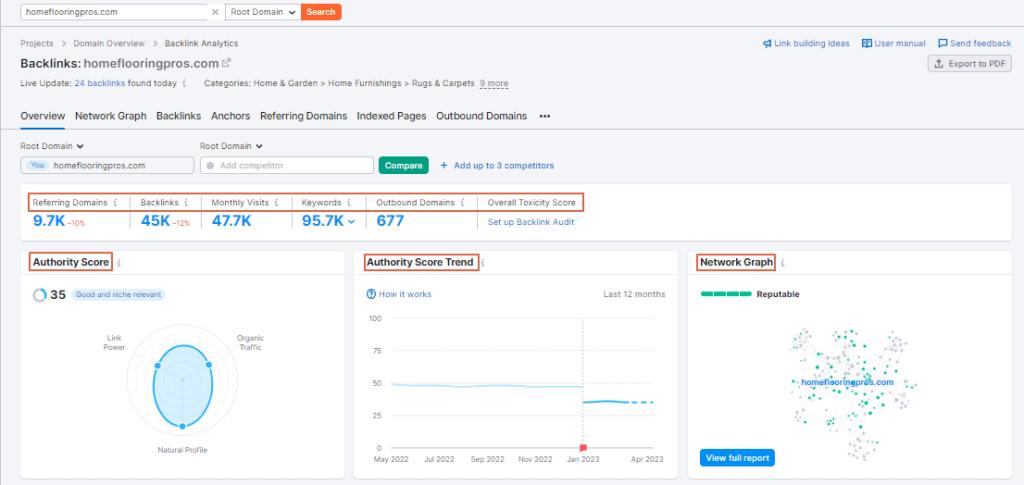
Backlinks are another topic that often seems more complicated than it is.
A backlink is simply a link from another website to yours.
If another website publishes an article and includes a link to one of your pages as a useful reference, your page has received a backlink.
Search engines use links, along with many other signals, to understand websites and webpages. As a result, marketers often analyze which sites link to them and which sites link to competitors.
The important lesson for a beginner isn’t simply that more backlinks are better. They aren’t all equal, and trying to acquire links purely to increase a number can lead to poor marketing decisions.
A more useful question is:
Why did another website consider this content worth linking to?
Perhaps it contains original research.
Maybe it explains something particularly well.
Perhaps it provides a useful resource.
That turns backlink analysis into something more interesting than counting links. It can help reveal what kinds of content other people within a market consider useful enough to reference.
Competitor backlink information can also reveal websites, publications, and resources in a market you may not have known existed.
Affilorama has introductory material explaining the subject in more detail, which is worth understanding before trying to interpret backlink reports:
The sensible progression is therefore:
Understand what backlinks are → examine the evidence → look for patterns → decide whether anything deserves action.
Competitor Analysis Is Really Market Observation
The term competitor analysis can also give beginners the wrong impression.
It can sound as though the objective is to find successful websites, discover what they’re doing, and copy them.
That isn’t the strategic value of competitor research.
Competitors provide another source of evidence about the market.
Suppose several established websites within your field are publishing substantial content around the same subject. That doesn’t automatically mean you should write another version of the same article, but it does suggest that the subject deserves investigation.
Perhaps competitors rank for search terms you hadn’t considered. Their backlinks may reveal publications and resources relevant to the market. Their website structures may show how they organize information for readers.
The purpose is not imitation.
It is observation.
You’re asking:
What can these websites teach me about the market I’m operating in?
This is particularly useful for beginners because your own website may initially have very little historical information. Competitor research lets you learn about the wider environment while your own evidence is still developing.
Website Health: Sometimes the Problem Isn’t Your Marketing
Another useful analytical area is website health.
Imagine that traffic to several pages suddenly declines. A natural reaction might be to assume the content is no longer good enough.
You start rewriting articles, changing headlines and adding more keywords.
But what if the content wasn’t the problem?
Perhaps important pages are no longer being indexed correctly. Maybe a technical error has appeared. Pages could be loading slowly. Internal links may be broken. Search engines may have trouble accessing parts of the site.
This is why website-health monitoring matters.
It helps separate content problems from technical problems.
For a beginner, that introduces an important discipline into online marketing:
Don’t change something until you have some idea why you’re changing it.
Instead of:
Problem → Guess → Change
we can move toward:
Problem → Investigate → Evidence → Decision → Change → Measure Again
That small difference in approach is fundamental to the way MOS thinks about improvement.

Bringing Different Pieces of Evidence Together
So far we’ve discussed keywords, rankings, backlinks, competitors, and website health separately.
Their real value becomes clearer when we start connecting them.
Imagine an important article has gradually lost search traffic.
A ranking report confirms that its search positions have declined.
Keyword research shows that people are still searching for the subject, so demand hasn’t disappeared.
A website-health report shows no obvious technical problem.
Competitor analysis reveals that several competing pages have been substantially updated.
Backlink analysis shows that some of those competing pages are also attracting references from other websites.
We still haven’t proved exactly why your page lost visibility.
But we now understand the situation far better than we did when we noticed that traffic had fallen.
This is what good analysis does.
It doesn’t necessarily hand us an answer.
It reduces uncertainty.
And reducing uncertainty makes the next decision more informed.
Where AffiloTools Fits Into This Process
This is where AffiloTools becomes relevant.
AffiloTools was developed to bring several forms of affiliate and online marketing analysis into one environment. Its feature set includes keyword research, backlink analysis, search-ranking monitoring, competitor research, and website-health monitoring.
For someone managing an affiliate website, the practical attraction isn’t simply having a long list of tools.
It is having different sources of information available when trying to understand what is happening.
This is where we should apply the same Features → Benefits thinking used elsewhere on Marketing Online Strategy.
A ranking monitor is a feature. Its potential benefit is helping you see whether important pages gain or lose search visibility over time.
A backlink checker is a feature. Its potential benefit is helping you identify which websites reference your site or competing sites.
A website-health checker is a feature. Its potential benefit is alerting you to technical issues that might otherwise go unnoticed.
Keyword research is a feature. Its potential benefit is helping you discover what people are searching for and identify topics worth further investigation.
Competitor research is a feature. Its potential benefit is giving you another source of market evidence.
The benefit isn’t the software itself.
The benefit is what the information may help you understand.
AffiloTools Within the MOS Framework
AffiloTools also fits naturally into the latter part of our Marketing Online Strategy framework:
Market → Message → Media → Response → Measure → Improve
Market asks who we’re trying to reach.
Message asks what we should communicate.
Media asks where that communication should take place.
Response tells us what happened when people encountered it.
Measure helps us examine that response.
Improve asks what the evidence suggests we should do next.
That last part matters because measurement isn’t supposed to be the end of the process.
A report sitting in a dashboard achieves nothing on its own.
The commercial value appears when information contributes to a better decision.
We can therefore expand the final part of the framework:
Response → Measure → Interpret → Decide → Improve → Measure Again
That creates a feedback loop rather than a one-time marketing campaign.
 When Does AffiloTools Make Sense for a Beginner?
This requires some care because not every beginner needs analytical software immediately.
If you’re still learning what keywords, backlinks, and search rankings mean, adding more dashboards may create more confusion than clarity.
Education should come first.
This is exactly why we began this Resources pathway with our article on Structured Affiliate Marketing Training. It explores why learning the fundamental process in a logical sequence can be more useful than collecting disconnected marketing tactics.
Once you understand the concepts and begin applying them, analysis tools become much easier to interpret.
The progression is:
Learn → Apply → Measure → Understand → Improve
This is also why Affilorama often introduces its broader training before the analytical tools. The tool makes more sense when users understand what the measurements represent.
For someone already running a website, publishing content, and starting to ask questions about performance, AffiloTools becomes much more relevant.
Evaluating AffiloTools as a Resource
Before subscribing to any marketing software, identify the problem you’re trying to solve.
If you need keyword information, ask whether the keyword research functionality provides the information you actually need.
If you want to understand backlinks, determine whether backlink analysis is genuinely part of your current strategy.
If you already use several separate services for rankings, website health, and research, consider whether bringing some of those functions together would make your workflow simpler.
Just because software has ten features doesn’t mean you need all ten.
A product provides value when the features you actually use solve problems worth solving.
That takes us back to one of the principles behind our Benefits vs Features in Marketing discussion:
Feature → Function → Practical Benefit
Evaluate the benefit to your situation, rather than the size of the feature list.
Explore AffiloTools
If you’re already applying affiliate marketing principles and want a clearer way to investigate keywords, backlinks, rankings, competitors, and website health, explore AffiloTools to see whether its combined approach suits your needs.

Explore AffiloTools:
AffiloTools
AffiloTools
Affiliate link — Marketing Online Strategy may receive a commission if you purchase through this link, at no additional cost to you.
Don’t Measure Everything Simply Because You Can
Once analytics become available, another problem can develop.
You can start measuring everything.
Rankings change every day. Traffic moves up and down. Backlinks appear and disappear. Competitors publish new material. Keyword estimates change. Website reports produce warnings.
It’s easy to spend more time watching numbers than improving the business.
A better approach is to begin analysis with a question.
Perhaps an article has lost traffic.
Perhaps you want to identify subjects for future content.
Maybe a page isn’t appearing in search results as expected.
Perhaps you want to understand why a competitor consistently appears above you for an important search.
Now the data has a purpose because you’re looking for information relevant to a defined problem.
This turns analysis from watching numbers into investigating questions.

From Measurement to Improvement
The real objective of analysis is not measurement.
It is learning.
Suppose you observe that articles addressing very specific beginner questions consistently attract more search visitors than broad articles covering large subjects.
That’s useful evidence.
You might form a hypothesis that your audience responds better to focused questions.
Your next content decisions can test that idea.
Perhaps the pattern continues. Perhaps it doesn’t.
Either way, you’ve learned something from your own market rather than relying entirely on generic advice.
The process becomes:
Observation → Question → Evidence → Hypothesis → Decision → Change → Measure Again
Over time, those cycles create a body of knowledge specific to your own website and audience.
No marketing tool can provide that on day one.
The tool provides the evidence.
Experience turns that evidence into understanding.
The Tool Should Follow the Question
This is ultimately where AffiloTools fits within Marketing Online Strategy.
We don’t begin with:
“Here is some software. What can we do with it?”
We begin with:
“What are we trying to understand?”
Then:
Question → Information Required → Appropriate Tool → Evidence → Interpretation → Decision
Sometimes AffiloTools provides the right information.
Sometimes Google Analytics, Search Console, or another specialist service may be more appropriate.
And sometimes you don’t need another tool at all.
The product should follow the requirement.
If your current requirement is bringing several areas of affiliate marketing research and analysis together so you can better understand what is happening, you can examine AffiloTools here:
Look at the functions provided. Decide which ones you would genuinely use. Compare those functions with whatever tools you already have, and consider whether bringing them together would solve a real problem for you.
The purpose of marketing analysis isn’t to collect more numbers.
It is to understand enough about what is happening to make the next decision with better information.
Affiliate Disclosure: Some links on Marketing Online Strategy are affiliate links. If you purchase through one of these links, we may receive a commission at no additional cost to you. This does not influence which resources we discuss. Products and services should always be evaluated according to your own needs and circumstances.